
Sweetheart Shared Bedroom

Sweetheart Shared Bedroom
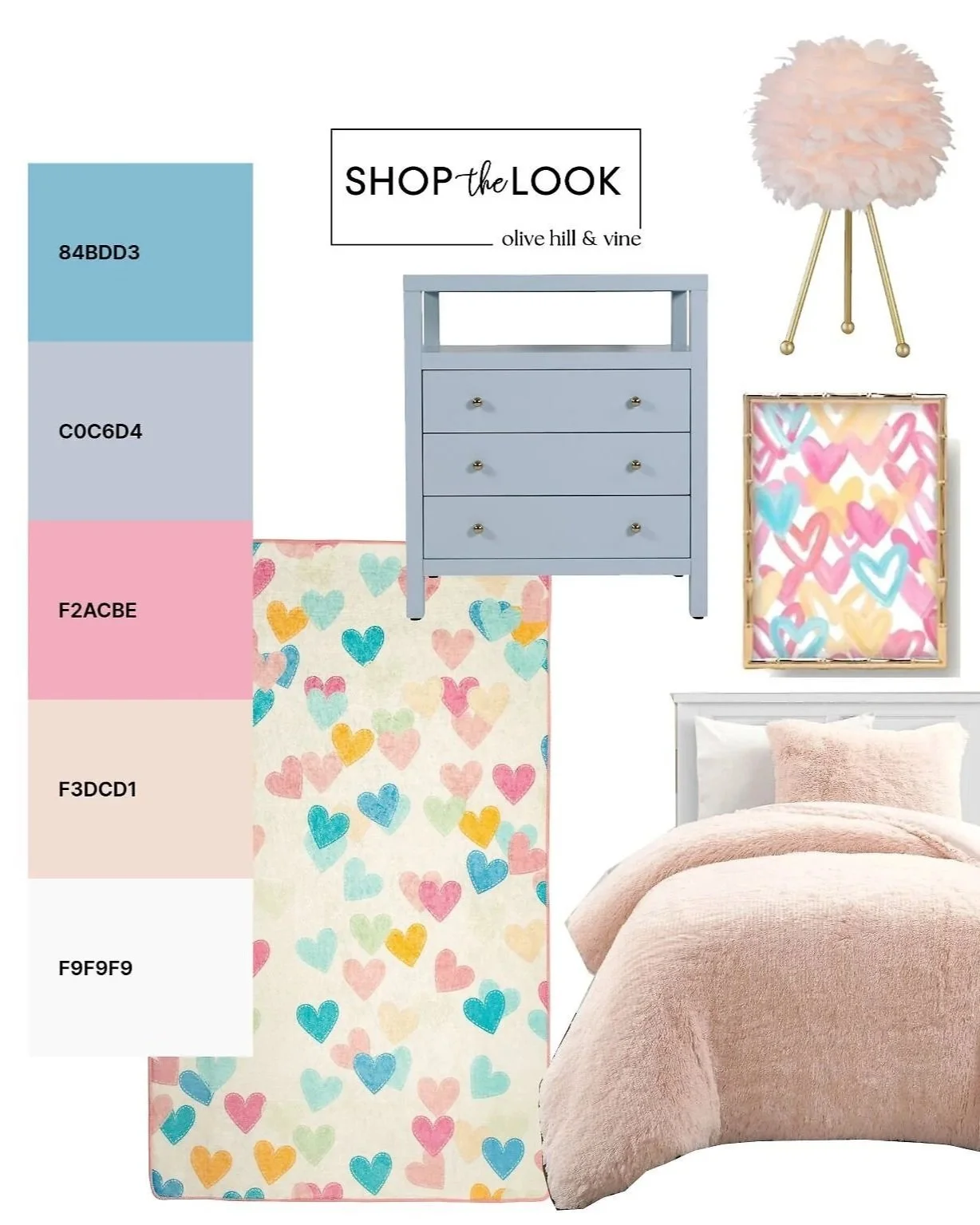
Some spaces begin with a floor plan. Others begin with a color. This one began with a reaction — every time we pulled together soft blush tones and hand-painted hearts, the board just felt right. Instead of forcing a theme, we followed the feeling and let the palette guide the decisions. The result is a shared bedroom that’s gentle, playful, and — yes — completely all heart.
Designing for two children always asks the same question: how do you make a room fair without making it identical? Perfect symmetry can look beautiful in photos, but real life works better when each child still feels ownership of their side. Our goal wasn’t to create matching halves; it was to create harmony. The mood board became our roadmap for achieving that balance.
We started with the foundation: color. Soft blush became the warmth of the room, while a powder-blue dresser grounded the palette so it never felt overly sweet. That blue is important — it gives the eye a resting point and keeps the room from drifting into a one-note pink space. In shared rooms especially, contrast helps define structure and keeps the environment visually calm even when there’s a lot happening.
From there, texture took the lead. A room for kids shouldn’t rely only on color; it should invite touch. Cozy bedding layers, plush rugs, and gentle upholstery create comfort in a way paint alone never can. Texture also helps a room grow with its occupants. While bright characters or trendy motifs can age quickly, tactile elements remain appealing year after year. A soft throw still feels good at eight years old and at twelve.
Hearts appear throughout the design, but intentionally in varied ways. Instead of repeating one pattern everywhere, we layered different interpretations — watercolor hearts in artwork, subtle motifs in textiles, and playful shapes in accent pieces. This keeps the theme cohesive without becoming overwhelming. Repetition builds recognition; variation keeps it interesting.
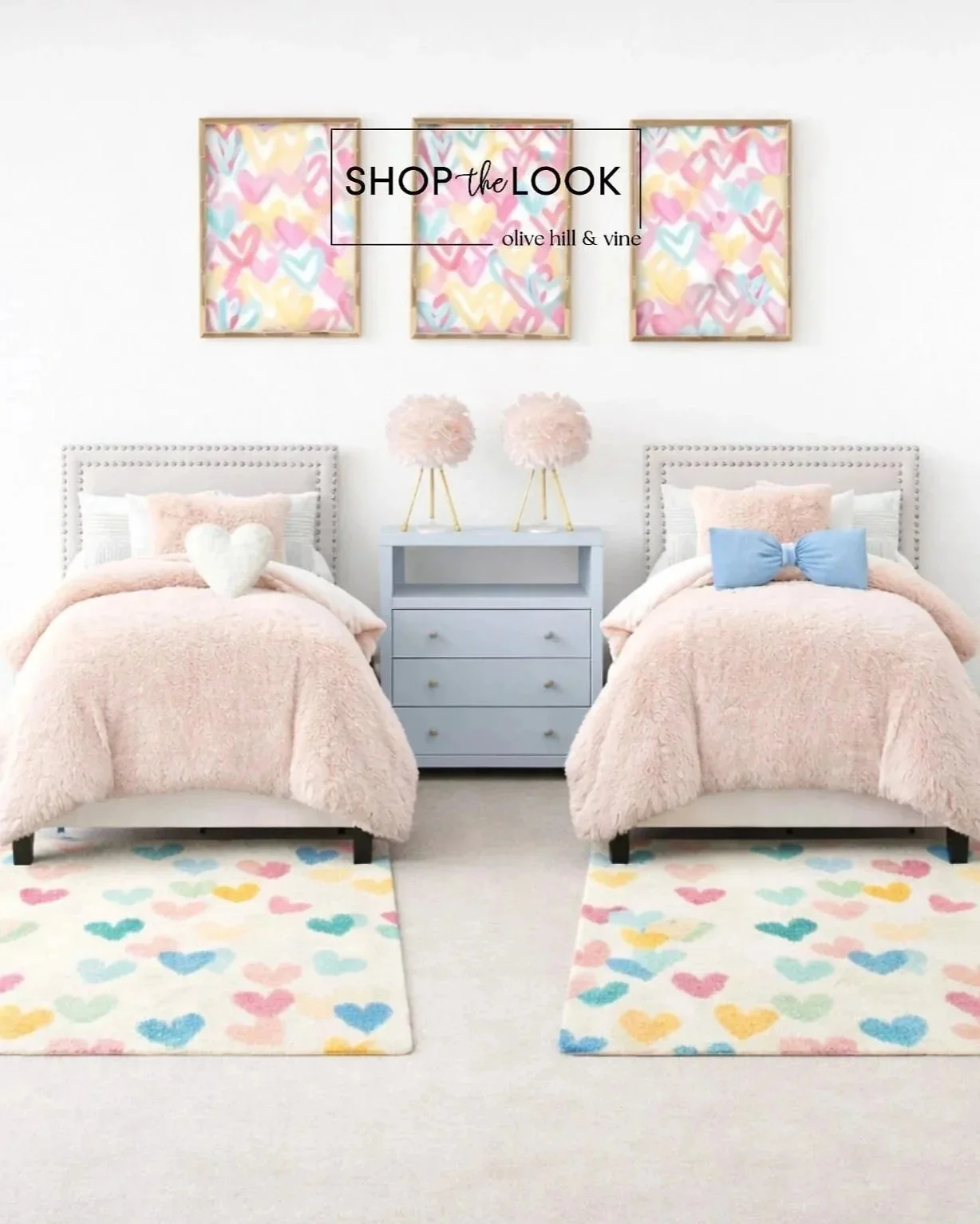
The twin layout anchors the space with a sense of fairness. Each bed has equal presence, equal lighting, and equal storage access. That equality matters psychologically in shared environments — children notice balance immediately. However, we styled each side slightly differently so personality can develop naturally over time. One child might gravitate toward plush accessories while the other prefers minimal styling, and the room can adapt without needing a redesign.
Lighting was chosen to reinforce the softness of the palette. Rather than sharp overhead brightness, layered lighting creates atmosphere. Bedside lamps add glow at eye level, which feels comforting and more personal at night. The gentle illumination also enhances the textures in the bedding and rugs, allowing the materials to do some of the decorative work. Good lighting isn’t just functional — it’s emotional.
Storage is another silent hero in a shared bedroom. The dresser provides a communal anchor while leaving room for personal organization within drawers and baskets. In shared spaces, clutter builds twice as fast, so thoughtful storage keeps the room peaceful. A calm environment supports better sleep, easier mornings, and smoother routines for both kids and parents.
When we transitioned from mood board to finished room, the biggest success was how naturally everything connected. The art pulled color from the bedding, the rugs grounded the beds, and the blue dresser balanced the warmth. Nothing felt placed just for decoration — every item contributed to the overall story. That’s the difference between a collection of cute items and a cohesive design.
Most importantly, the room avoids feeling babyish. Sweet doesn’t have to mean temporary. By keeping the shapes classic and the colors gentle rather than saturated, the design grows alongside the children. Swap pillows, update artwork, or trade plush accents for more tailored ones later, and the room evolves without needing new furniture.
Shared bedrooms work best when they support both togetherness and individuality. This design leaves space for whispered conversations after lights-out while still giving each child a corner that feels like theirs. It’s playful, calming, and flexible — a room built for real life, not just a photo.
In the end, every decision returned to that original reaction: the space simply felt happy. Sometimes good design isn’t about making a bold statement. Sometimes it’s about creating a place where siblings can laugh, read, rest, and grow. A room that welcomes both personalities while holding them together.
A shared bedroom, thoughtfully balanced and genuinely — all heart.
THIS WEBSITE CONTAINS AFFILIATE LINKS WHICH MEANS IF YOU PURCHASE SOMETHING THROUGH OUR LINKS WE MAY BE ABLE TO RECEIVE A SMALL COMMISSION OF THE SALE AT ABSOLUTELY NO ADDITIONAL COST TO YOU. THANK YOU VERY MUCH FOR SUPPORTING OLIVE HILL & VINE BY SHOPPING THROUGH OUR LINKS!